
Second Growth 003: The Space Between Yes and Keys | A Bent But True Documentary
The appraisal came back, the rate is locked, and now we are learning how much dreaming can fit inside a season of waiting.

The appraisal came back where it needed to. After weeks of wondering whether someone with a clipboard might see the house differently than we did, we received the call telling us that another hurdle was behind us.
There was relief in that, although buying a house rarely seems to let relief last very long. One question gets answered and another quietly takes its place. Interest rates looked as though they might begin climbing again, so we locked ours at 6.49 percent. If enough of the seller credit remains after the final closing costs are calculated, we may be able to buy it down to around 6.25 percent. As with nearly everything else in this process, we will not know for certain until all the numbers settle into place.
For now, we are back where home buying keeps returning us: the strange space between movement and stillness. Documents are passing between people, figures are being checked, and boxes are being marked somewhere beyond our view. From our side, there is very little left to do except answer the phone when it rings and resist the urge to mentally move into a house that still belongs to someone else.
Waiting leaves a great deal of room for dreaming.
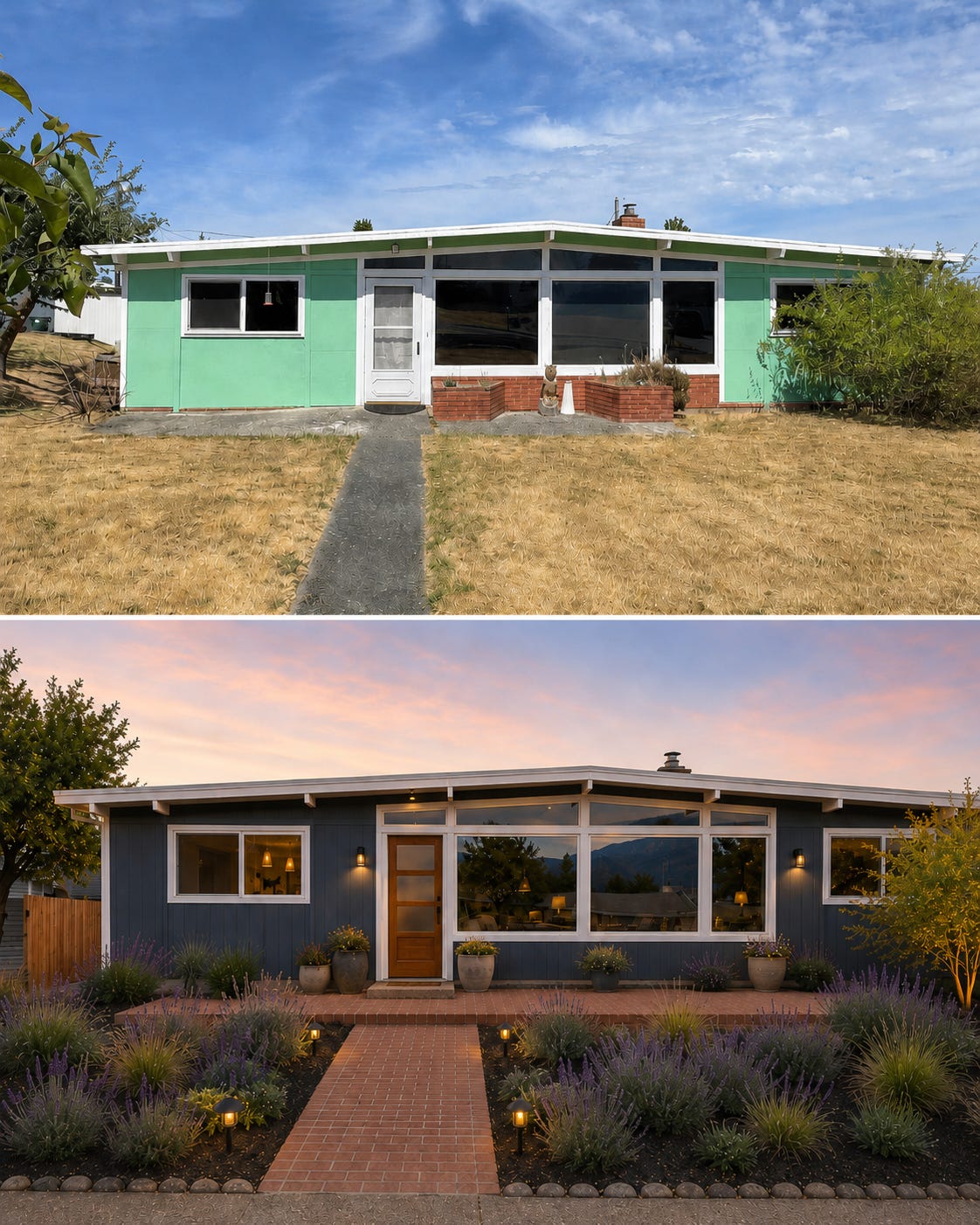
What is now, and one possibility for what could be.
We have talked about paint colors, furniture, the library, the fence, and which repairs need to happen first. I have reorganized the garage in my head more times than I can count. Some days it is a workshop. Other days part of it becomes a grow room. By the end of the conversation, it has somehow become a place that produces vegetables, mushrooms, income, and enough room for every tool I own.
Reality will eventually intervene, as it always does. Walls have fixed dimensions. Money has limits. Time is stubborn. Still, this stretch before closing has allowed us to ask a larger question than where the sofa should go.
What could this property help us build?
Not simply what could we build on it, but what might it make possible while we are there?
We are not arriving with a renovation account full of money waiting to be spent. There will be a fence to build, a garage to secure, siding to repair, rooms to paint, and all the smaller expenses that only reveal themselves after a house becomes yours. Doing much of the labor ourselves will help, but it will not make lumber, wiring, paint, soil, fencing, or tools free.
That means the story of this house cannot only be about what we change. It also has to be about how we find a way to pay for those changes when the money does not naturally exist.
Most renovation stories begin after the budget has already been found. The camera turns on when the materials arrive, the wall comes down, and the transformation begins. What often remains outside the frame is the part where someone looks at a bank balance and decides which project can happen now, which one must wait, and whether there is another way to make the numbers work.
For us, that part belongs in the story.
We have started looking at the backyard and garage differently because of it. A garden could give us food, but perhaps it could also produce seeds, unusual herbs, or vegetables that are difficult to find locally. A small indoor setup might allow us to experiment with microgreens throughout the year. Mushrooms could fit into another corner. Worm bins might provide castings for the garden, bait for local fishermen, or feed for chickens.
Then the ideas become stranger.
Exotic shrimp. Unusual plants. Small systems that could begin quietly, teach us something, and perhaps produce enough income to help fund the next project.
Some of those ideas will probably fail. Others may sound better while we are sitting at the table with a notebook than they will when we are cleaning trays, hauling soil through the rain, or trying to solve a problem we did not know existed. A few may never move beyond the dreaming stage.
That belongs in the story too.
We do not want to create the illusion that every idea becomes a business or that every corner of a home must earn money. A backyard should still have room for a dog to lie in the sun. A garden can be worthwhile even when its only profit is dinner. Not everything needs to justify its existence in dollars.
At the same time, there is something appealing about asking the property to participate in its own renewal.
Perhaps a few shelves of microgreens could help pay for paint. Seeds saved from one season might help fund lumber the next. A garden could reduce the grocery bill while teaching us what grows well in this particular patch of the Olympic Peninsula. One modest success might create enough room for another experiment.
That feels more honest than pretending we will simply decide to renovate a room and purchase everything required without consequence. Every project will compete with ordinary life. Groceries, utilities, car repairs, medical expenses, and all the other costs of being alive will not disappear because someone hands us a set of keys.
Second Growth was never supposed to be a before-and-after story. The finished room matters, but so does everything that had to happen before the first board was cut. Sometimes progress will mean completing a project. Other times it may mean waiting another month because doing the work properly matters more than doing it quickly.
We want to share that part honestly: what something actually cost, what we could reuse, what we found secondhand, and how much we saved by doing the work ourselves. We also want to show the ideas that sounded promising but never justified the time they required, because failure is part of learning what a place can support.
Those questions are not separate from the work of making a home. They are part of the work.
The appraisal coming back gave us another reason to believe this is really happening. Locking the interest rate made the mortgage feel less like an estimate and more like a commitment. Yet we are still standing in the space between yes and keys, close enough to imagine the future but not close enough to begin building it.
Perhaps that is why the ideas keep multiplying. We cannot repair the garage yet, so we imagine what it could become. We cannot plant the yard, so we study what might grow there. We cannot earn anything from the property, so we ask whether one small experiment might eventually help support another.
There is hope in that kind of planning, but there is also responsibility. Dreaming is easy while every idea is still free. The real work will be deciding which dreams deserve our time, which ones fit the land, and which ones can grow without taking more from us than they return.
I suspect that will become one of the deeper stories of this project.
How do ordinary people improve the small part of the world entrusted to them when their finances do not leave much room for improvement?
The answer probably will not be dramatic. It will be made of secondhand tools, reused materials, delayed gratification, small sales, failed experiments, and work completed one piece at a time. It may mean growing something before we can build something. It may require accepting that the house will change more slowly than our imaginations would prefer.
But slow growth is still growth.
For now, the appraisal is finished. The rate is locked. The final numbers are still moving, and the keys remain somewhere ahead of us. While we wait, we are beginning to imagine not only what this property might become, but how it might help us become capable of caring for it.
A house is never really ours. We simply care for it until it is someone else’s turn.

Second Growth follows our attempt to care for one house on the Olympic Peninsula—and what that work continues to teach us about caring for people, places, and the small part of the world within our reach.