

This piece was written for Bradley Ramsey’s Flash Fiction February.
There are no judges.
Just stories placed in the open and held there by the people who read them.
This one is about a game most of us learn without being taught.
Still
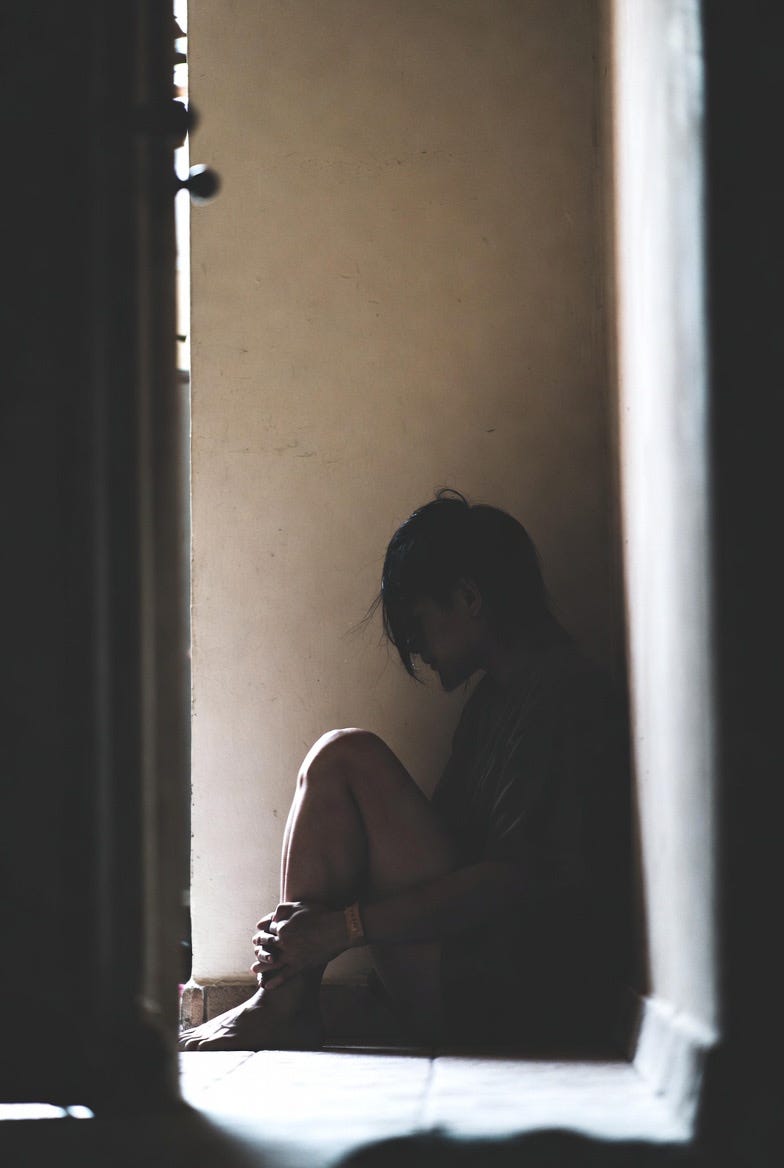
They called it Still, because calling it anything else felt dramatic.
No one introduced it like a game. It was passed quietly, the way people pass tissues or glances that mean hold on. You learned it in fragments. In hallways. In parked cars. In bathrooms with flickering lights and locks that never worked right.
The first time I played, I was twelve.
I didn’t know the rules yet. I only knew my chest felt wrong, like something had dropped inside it and refused to settle. My mother was on the phone in the kitchen, her voice thin and sharp. My father wasn’t home. Again.
I sat on the floor of the hallway, back against the wall, staring at a crack in the baseboard. I didn’t cry. I didn’t move. I stayed until the feeling thinned enough to stand.
No one noticed.
That’s how Still works best.
By the time someone explained it to me, I was already good at it.
A woman at work said it once, not looking up from her screen. “Just sit where you are. Don’t make it worse. Don’t make it visible.”
I nodded.
“Pick one thing not to think about,” she added. “Don’t narrate it.”
That part felt familiar.
“And if someone asks if you’re okay,” she said, finally glancing at me, “you say you’re fine. Always.”
“Of course,” I said.
She smiled, relieved. “You’ll be great at this.”
She was right.
I played Still in parked cars with the engine off, forehead pressed to the steering wheel. I played it in bathrooms during family gatherings, sitting on the edge of the tub with my hands folded in my lap. I played it on my apartment floor at night, lights off, listening to the refrigerator hum.
There was no timer. The round ended when I could stand up without feeling better for it.
Relief meant I’d stopped too soon.
Winning felt like neutrality. Like returning to baseline.
People trust baseline.
The first thing I lost was my startle reflex.
I noticed it when a car backfired nearby and my body didn’t react. My heart didn’t spike. I just turned my head and kept walking.
It felt like competence.
Later, memories softened at the edges. Not the big ones. The small ones. The sound of my father’s laugh when it was real. The way my mother used to hum while folding laundry, before everything tightened.
I didn’t miss them. I knew they were gone the way you know a room has been rearranged without remembering how it looked before.
That’s how you know the game is working.
People started relying on me.
I stayed calm in emergencies. I didn’t panic. I didn’t raise my voice. I knew how to sit with people while they fell apart without joining them.
“You’re so steady,” they said.
“You’re so strong.”
“You always know what to do.”
I did.
The answer was almost always: stay still.
I taught Still to my partner without calling it a game.
They were crying on the kitchen floor one night, breath hitching like something had broken loose inside them. I sat down across from them and waited until they could hear me.
“Try not to think about it all at once,” I said. “Just sit with it.”
They nodded.
“Don’t move yet,” I added. “It’ll pass.”
It did. It always does.
They looked at me afterward, eyes red but calmer. “How do you do that?”
“Practice,” I said.
I didn’t tell them what it costs. I didn’t know how to explain something no one ever writes down.
The supernatural part didn’t announce itself.
It never does.
It showed up in reflections first. Not distortions. Omissions.
Sometimes I’d catch my face in a dark window and feel like something had been cropped out. Not wrong. Just… reduced.
During long rounds, the silence felt heavier than it should, like it was learning my shape.
I ignored it. Still requires focus.
I broke the rules years later.
A friend sat across from me in a diner, hands shaking around a mug they hadn’t touched. They told me something bad. Something real. Something that deserved a reaction.
I felt the familiar drop in my chest. The start of a round.
I sat still. I picked the thing not to think about.
Then they asked, very quietly, “Are you actually here with me right now?”
The correct response was I’m fine.
Instead, my throat tightened.
“Yes,” I said. “I am.”
The pain came back all at once.
No lights. No voices. Just sensation flooding in like blood rushing into a limb that had been asleep too long.
I cried in the diner booth. People stared. Someone asked if I needed help.
I said yes.
I lost that round completely.
The pain didn’t stop afterward.
It stacked. Every avoided moment returned out of order. Twelve. Twenty. Thirty-two. All at once.
I understood then why most people never quit all at once.
Still is merciful that way. It spreads the cost thin enough that you don’t notice the bleeding.
I don’t play anymore.
Not properly.
Sometimes, when the feeling hits, I still sit down. Old habits die quietly. But I don’t force myself to stay. I don’t correct my voice if it breaks. I let people see me shake.
It’s harder this way. Louder. Messier.
More alive.
I still know the rules. I know exactly who would be good at the game.
I don’t teach them.
That might be the last thing I’ve managed to keep.
Still works because it’s quiet.
Because it doesn’t ask permission.
Because it gets you through the moment.
But it doesn’t leave you unchanged.
If this felt familiar,
that recognition matters here.
Flash Fiction February doesn’t use judges.
The only thing that carries a story forward is engagement.
If this stayed with you:
a like keeps it visible
a comment tells me you were here
a restack passes it to someone who might need it
That’s the game this month.
I played my whole childhood chilling to see it written
The idea of emotional stillness as a game you can 'win' really hit home for me.
I definitely recognise that quiet habit of trying to stay at 'baseline.' Your description of the cost, especially the thinning out of memories, is so well observed.
I really appreciated the ending and the choice to be 'messy' and present instead.
It’s a very human piece of writing.